
正念竹 道場
Perth & Kinross
Shonenjiku Dojo
School of Correct Thought
Practising the Japanese sword arts of Iaido and Jodo in Scone, Perthshire. All abilities welcome. No experience required.
“Wherever you are and whatever you are doing, be prepared — so that if necessary a situation can be resolved by force of spirit and decisive technique.”
-The meaning of Iaido
居
The Art of the Sword
Iaido
ee-eye-do · 居合道
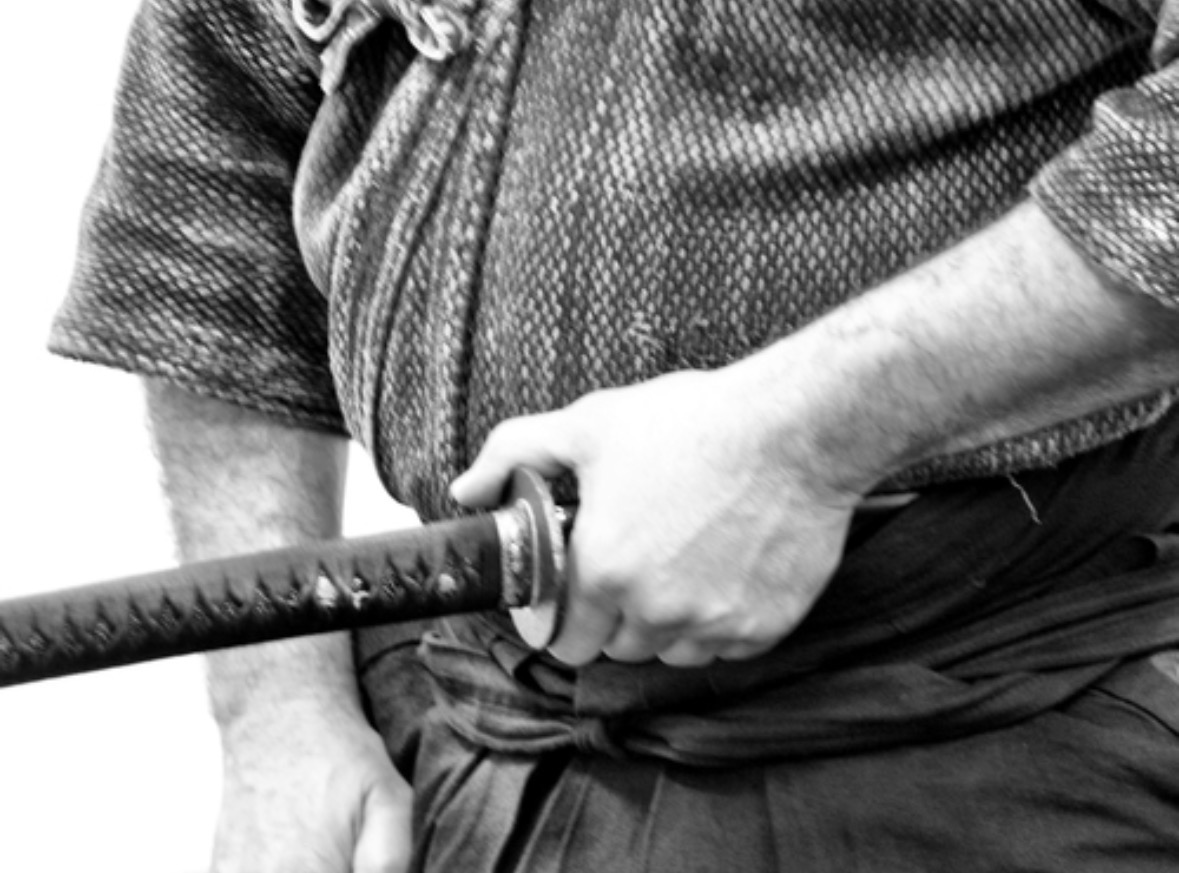
Iaido is the art of drawing the Japanese sword — conceived as a mental and physical discipline that unites spirit, action, and blade. The word itself means being in harmony and ready to act: “I” (being), “ai” (harmony), “do” (the way). Training is based on solo kata (set forms), each beginning with the sword sheathed, then drawing, cutting, and re-sheathing in one fluid sequence. There is no free sparring. Through repetition, rigidity gives way to effortless, natural movement. At Shonenjiku we practice both ZNKR (Seitei) Iaido — the twelve-kata standardised syllabus of the All Japan Kendo Federation — and the classical school of Muso Shinden Ryu, founded by Nakayama Hakudo in 1932.
杖
The Art of the Staff
Jodo
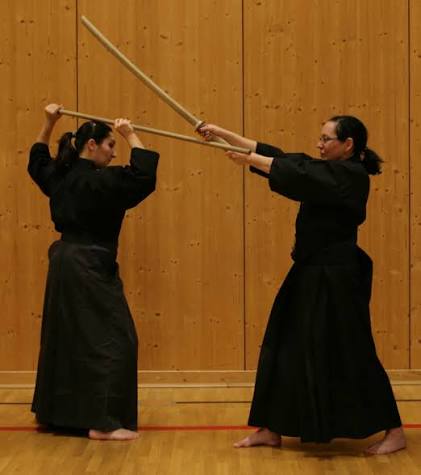
Jodo — “the way of the stick” — dates to the early 1600s. The Jo is a 128 cm wooden staff used in paired kata against a partner with a wooden sword. Legend holds that Gonnosuke Katsuyoshi developed jojutsu after his defeat by Miyamoto Musashi, later defeating Musashi in a second duel.
Training develops kata in pairs: each scenario begins with a sword attack, met with avoidance and a counter-strike or thrust from the Jo. As technique matures, performance becomes an effortless, natural partnership between both practitioners.
We train in ZNKR (Seitei) Jodo — the twelve standardised kata created in 1968 — and in the deeper classical tradition of Shindo Muso Ryu, which comprises around 60 kata as well as subsidiary weapon systems.
Your First Steps
Beginning Training
No experience is required to start — all ages, abilities, and backgrounds are welcome. Here is what to expect when you join us.
Come in comfortable sportswear — jogging trousers and a t-shirt are ideal. The dojo will loan you a bokken (wooden sword) and jo (staff) for your first sessions. No equipment to buy yet.Once you decide to continue, you will need a gi, hakama, obi, and bokken. Iaido students progress to an iaito (blunt metal training sword). Your teacher will advise on quality suppliers.No specific fitness level is required. Many iaido techniques are performed from seated positions; standing alternatives are available for those who cannot kneel. All abilities train together. There is no grade shown on clothing. A nafuda (embroidered patch) with your name and club is normally worn on the left chest. No footwear is worn during training except for medical reasons. Shonenjiku is a member dojo of the British Kendo Association (BKA). Gradings follow the BKA syllabus and are conducted at national and regional events. An iaito is compulsory for BKA iaido gradings.The path from beginner to advanced is measured in years of patient practice. Only senior practitioners progress to a shinken (live blade). There is no competition within the dojo — only self-development.
Our History
About Shonenjiku Dojo
Hugh Darby, dojo leader of Shonenjiku Perth & Kinross, trained at Shonenjiku Glasgow for many years before relocating to Perthshire, and continues the lineage of that dojo name. Hugh began his martial arts journey in 1985 under Sam McKay at the Kensaki Dojo in Glasgow — one of the early members of the British Kendo Association. From the early 1990s he also trained at Shonenjiku Glasgow after it was founded by Billy Smart (another of Sam’s students), eventually switching exclusively to Shonenjiku Glasgow in the late 1990s. He achieved 6th Dan Iaido in 2006, 5th Dan Jodo in 2008, and the Iaido Renshi certification in 2017.

Shonenjiku is a member dojo of the British Kendo Association (BKA) — the governing body for Kendo, Iaido, and Jodo in the UK, founded in 1964, and affiliated with both the European Kendo Federation (EKF) and the All Japan Kendo Federation (ZNKR).
Dojo Leader
Hugh Darby
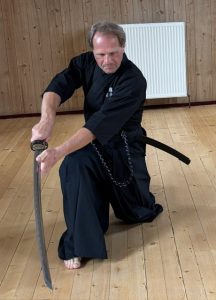
Hugh Darby, dojo leader of Shonenjiku Perth & Kinross, trained at Shonenjiku Glasgow for many years before relocating to Perthshire, and continues the lineage of that dojo name. Hugh began his martial arts journey in 1985 under Sam McKay at the Kensaki Dojo in Glasgow — one of the early members of the British Kendo Association. From the early 1990s he also trained at Shonenjiku Glasgow after it was founded by Billy Smart (another of Sam’s students), eventually switching exclusively to Shonenjiku Glasgow in the late 1990s. He achieved 6th Dan Iaido in 2006, 5th Dan Jodo in 2008, and the Iaido Renshi certification in 2017.
Training Times
Class Schedule
Classes are held on the last weekend of each month at the Robert Douglas Memorial Institute, Scone.

Iaido
居合道 – Japanese Art of Sword Drawing
Day & Time
Last Sunday of every month Beginning 26th July 2026 Sunday 12:00-14:00
Venue
Robert Douglas Memorial Institute Douglas Hall 102 Abbey Road, Scone Perth PH2 6RU
Jodo
杖道 — Japanese Art of the 4ft Staff
Day & Time
Last Sunday of every month Beginning 26th July 2026 Sunday 14:00-16:00
Venue
Robert Douglas Memorial Institute Douglas Hall 102 Abbey Road, Scone Perth PH2 6RU
Get in Touch
Contact Us
Whether you are a complete beginner or an experienced martial artist looking for a new dojo, we would love to hear from you. Please get in touch with any questions.
budoenquiries@icloud.com
Telephone
07428 990 092
Dojo Address
Robert Douglas Memorial Institute Douglas Hall, 102 Abbey Road Scone, Perth PH2 6RU
Get in Touch
Contact Us
Shonenjiku Dojo
Perth & Kinross · 正念竹 道場
Member dojo of the
British Kendo Association
© 2026 Shonenjiku Dojo Perth & Kinross. All rights reserved.